
Meet Our Maestro Mezcaleros, Crafting Small-Batch Mezcal in Oaxaca
From agave fields to the bottle, our three master producers bring tradition, flavor, and authenticity to every drop of Dos Gabachos Mezcal.
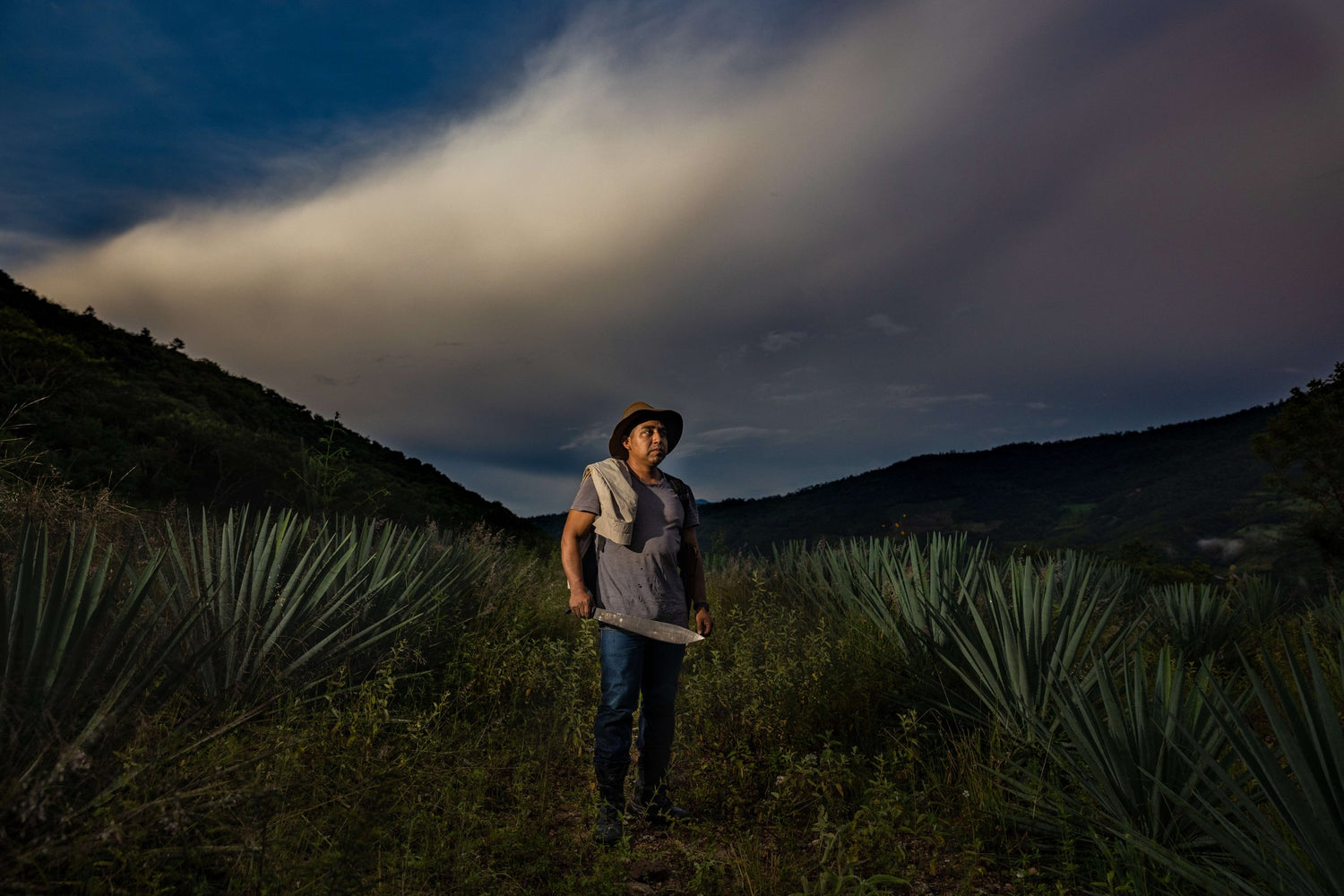
Maestro Mezcalero Abel Martinez "El Brujo del Monte", The Mountain Sorcerer.
Meet Maestro Mezcalero: Abel Martinez
Abel is the mastermind behind Dos Gabachos’ flagship Espadín and Rosé mezcals, crafted where he resides in Santo Domingo Albarradas, Oaxaca.
We must say, not only is Abel the magic man in the mountains (have you tasted Dos Gabachos Mezcal?), but he’s also one of the most incredible people and the kindest man we’ve ever met. It’s been our pleasure getting to know Abel and his family since day one. One of the main reasons we’ve been united with Abel and the Martinez family is because we share the same goal: to put out a phenomenal mezcal and not cheat the game.
The road to get here as a unit hasn’t been easy (that story’s for another time), but the higher power’s been watching over us the whole way, and they know it was all for a reason.
Salud to Abel and the Martinez familia. More to come…
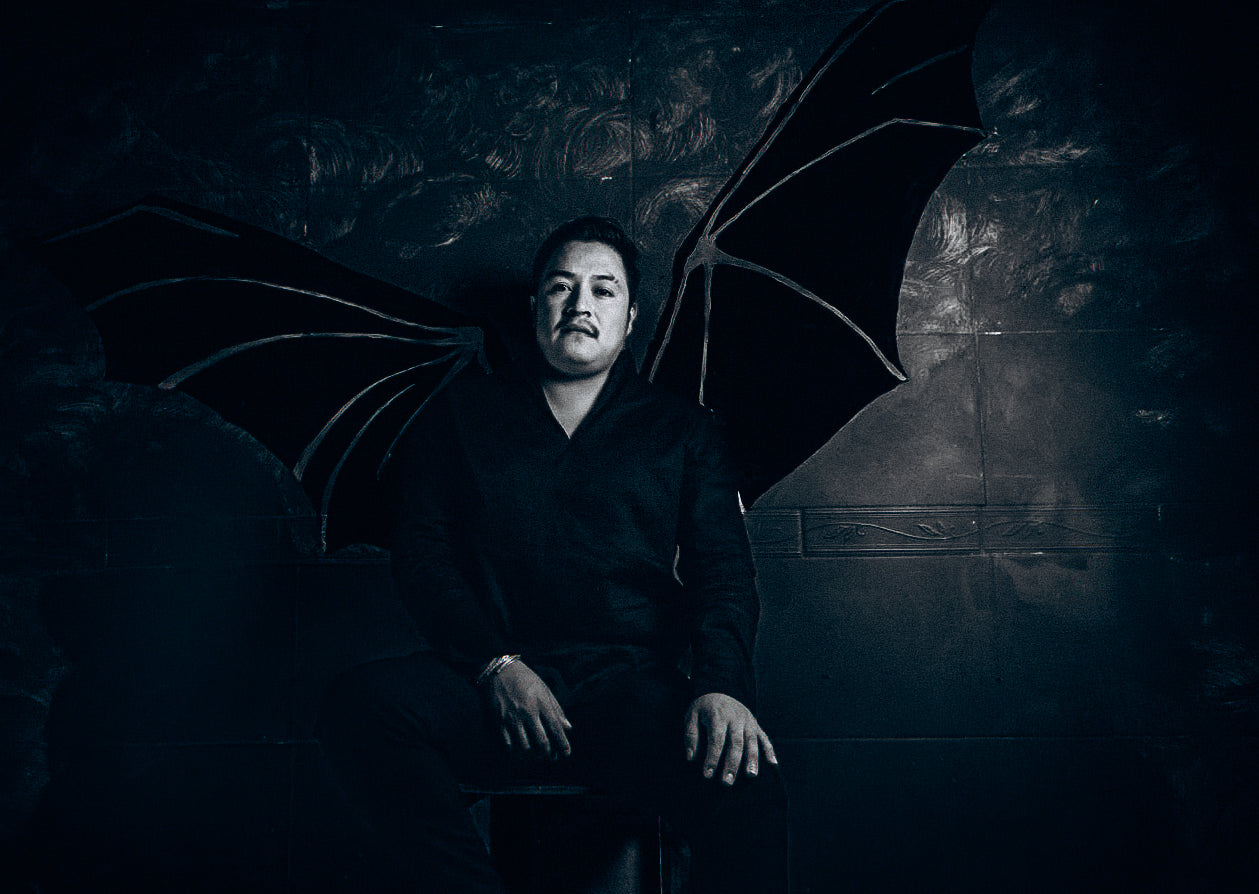
Maestro Mezcalero Rodrigo Martínez, aka “El Legado” (The Legacy)
Meet Maestro Mezcalero: Rodrigo Martínez
Fifth-Generation Mezcalero. Son of a Legend. Carrying the Family Torch with Pride.
Rodrigo Martínez is more than our Maestro Mezcalero, he’s family. We often don’t call him by name but simply "hermano." Rodrigo is the magician behind Dos Gabachos Mezcal Pechuga and Wild Cuishe, both handcrafted at his palenque in San Baltazar Guelavía, Oaxaca. His methods are time-honored, passed down through five generations of mezcaleros, including his father, the legendary Don Goyo.
Born into mezcal tradition, Rodrigo's earliest memories are of his great-great-grandfather, Wenceslao, one of the first to distill mezcal in their village. From a young age, Rodrigo learned that mezcal wasn't just a drink; it was a way of life, rooted in family, respect, hard work, and spirit.
What sets Rodrigo's mezcal apart is the personal care he pours into every production. Besides his attention to detail, he uses only fully matured agaves grown on the lands of San Baltazar Guelavía. The water comes from local springs and wells. The wild fermentation process is shaped by the elements and trees that surround his palenque. When we first met Rodrigo and Don Goyo, they showed us how the vegetation, crops, and surrounding environment all influenced the final flavor of their mezcal. We even helped unearth a fresh batch of roasted agave from their earthen oven, tasting the sweet, sap dripping agave, a moment we share through storytelling, time and time again.
Rodrigo believes the most important thing for people to understand is the time and dedication it takes to create mezcal, from cultivating agave over years to the intricacies of distillation. The struggle behind the growth of the plant to his extensive distillation knowledge, is reflected in every sip. For Rodrigo, the highlight of each production is tasting the final result. The secret ingredient, he says, is always love.
Rodrigo’s vision aligns seamlessly with ours. We didn’t start this brand to be just another label on a shelf or to chase overnight success. We did it because we fell in love with real mezcal, the kind that you just can't find anywhere, even in Oaxaca. Rodrigo makes that kind of juice, and every bottle he produces for us reflects that. He and his father taught us how to test if mezcal has been compromised: rub some on your forearm and take a whiff. If it smells like rubbing alcohol, it's been tampered with. Don Goyo said mezcal always tells the truth.
Our relationship developed organically and didn’t happen overnight. Rodrigo was one of the first mezcaleros we met on our travels, but we didn’t start working together until years later, after becoming true friends. "Hermanos," as we like to say. Our relationship is built on love, honor, respect, and trust.
Rodrigo once told us his greatest hope is for people to sip his mezcal and be transported to a memory, a moment, a feeling. Maybe one of the "funnest nights" of their life. Maybe something deeper. He hopes that through reminiscing, they also will remember the experience of his mezcal in that moment. That’s the magic Rodrigo brings to Dos Gabachos Mezcal.
He wishes that every table his mezcal reaches becomes a place where people drink each sip with respect, due to its craftsmanship, and hope they take a genuine interest in what they’re tasting.
When you drink Dos Gabachos Pechuga or Wild Cuishe, you’re not just sipping mezcal, you’re tasting a story that spans generations. Along with his own mezcal brand Revelador, Rodrigo is proud that through Dos Gabachos, he can share his family's work in San Baltazar, especially that of the Martínez Méndez lineage.
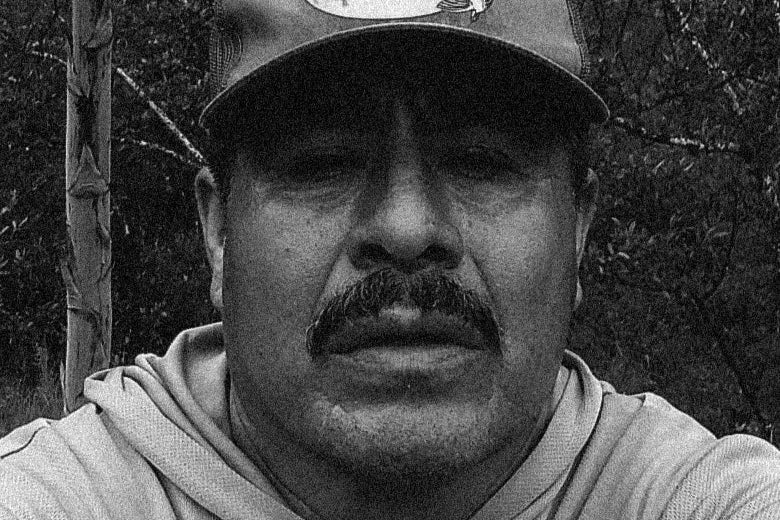
Maestro Mezcalero Eugenio López García, known as “El Metodista” (The Methodist)
Meet Maestro Mezcalero: Eugenio Lopez Garcia
“El Metodista” The Methodist
For Maestro Mezcalero Eugenio López García, mezcal is more than a spirit. It’s a living connection to his ancestors. His grandfather, Benigno López, began crafting ancestral mezcal in 1930, passing the tradition on to Eugenio’s father, Joel López, who continued the legacy through the 1960s. Now in Eugenio's hands, he plans to teach and pass the torch to his own son.
Today, Eugenio honors that lineage with the juice he produces, creating small-batch, artisanal mezcal that reflects not only his skill but also the emotion and pride he pours into every production. From carefully hand-selecting only ripe, mature maguey hearts to the unique process of single distillation using a refrescadera, Eugenio "leaves it all on the floor" every single time.
The Tobalá and Tepeztate mezcals he creates for Dos Gabachos carry decades of wisdom and leave a lasting impression. Each sip is a testament to a lifetime of hard but beautiful work and deep dedication to the craft of making the best mezcal possible.
Eugenio is proud to represent Dos Gabachos Mezcal and the sacred work of a maestro mezcalero. “For everything bad, mezcal. And for everything good, mezcal too,” he says.
He thoroughly enjoys every step of the process, and it makes him smile when he visualizes his bottle on a table with guests enjoying it. His only hope is that those who drink his mezcal learn about the craftsmanship it takes to make something so special. He’s not just making mezcal. He’s building a legacy for his son and showing the world what it really means to be a great mezcalero, and what exceptional mezcal tastes like.
Did You Know?
Dos Gabachos agave Tepeztate and Tobalá is uncultivated, growing wild in its natural habitat on the rocky mountainsides of Ejutla, south of Oaxaca City, at Eugenio’s palenque (distillery). Both agaves have long maturation cycles of at least 15 years and are limited in abundance, making them particularly scarce.
Gathering these agaves is extremely laborious, as the heavy piñas must be carried a quarter to half a mile by hand before being placed on a mule and hauled another four and a half miles to the palenque.
Eugenio cooks them separately, as they are single agave expressions, in an underground pit with limestone for three days. They are then mashed and fermented in open-air wood vats for eight days.
Eugenio distills each batch only once, using a refrescadera, a rare and traditional method that requires precision, patience, and deep understanding of the plant. Unlike most mezcals, which are double-distilled, this cold distillation process uses internal cooling plates to gently strip out toxins and impurities during a single pass. It allows Eugenio to refine the spirit without overheating or overworking it, preserving more of the wild agave’s natural aroma, flavor, and structure.
This approach is uncommon and speaks to Eugenio’s confidence in his craft. It’s a bold choice that results in a mezcal that’s pure, expressive, and true to the plant’s wild nature. With each sip, you taste not just the agave, but the place it came from, the method it was made by, and the hand of the mezcalero who's method cannot be replicated.
The Refrescadera
Traditional mezcal production is not built on strict standardization. Techniques vary by region, and often by family, with methods passed down through generations rather than defined by rigid technical systems.
In the region of Ejutla, Oaxaca, some mezcaleros use a device known as a refrescadera, a cooling element placed at the top of the still. Even within the region, the design can vary. Some refrescaderas include internal copper plates within the hood of the still, while others are simply smooth copper surfaces. These structural differences mean the system is not uniform, and its influence can vary from one palenque to another.
Eugenio’s refrescadera is fitted with interior copper plates and fed by a continuous flow of cold water throughout the entire distillation run. He does not change the water manually or add it in intervals, it falls steadily and without interruption from start to finish. This constant cooling is one reason his distillation runs slower than a conventional still. The refrescadera does not let the heat push the distillate through quickly. That slower pace is not a limitation. It is part of how the spirit is built.
To understand why the refrescadera matters, it helps to look at how distillation behaves.
Every distillation inevitably removes some congeners, the compounds other than ethanol that give a spirit its aroma, texture, and flavor. These include esters, terpenes, higher alcohols, aldehydes, and organic acids created during fermentation.
Ethanol forms strong hydrogen bonds with water, making the two difficult to fully separate in a single distillation. Because of this, the first distillation usually produces what mezcaleros call ordinario, a lower-proof distillate that still contains many dissolved congeners. A second distillation typically increases alcohol concentration while helping define the spirit’s aromatic profile.
Many of mezcal’s most important flavor compounds, such as fruity esters and citrus or herbal terpenes, become more perceptible during this second distillation as heat and vapor dynamics begin to redistribute and separate them.
However, repeated distillation gradually strips these compounds away. With each additional rectification, the spirit becomes more dominated by ethanol and less aromatically complex.
This is where the refrescadera becomes particularly interesting.
By cooling the upper portion of the still, the refrescadera creates a temperature gradient that causes some of the rising vapor to condense along the interior of the hood and on the copper plates. As hotter vapors continue to rise, these condensed droplets re-evaporate. This cycle of condensation and re-evaporation acts as a form of internal rectification inside the still itself, allowing several refinement cycles to occur during a single distillation run. Because the still is solid copper, that process happens entirely out of sight, but its effect, Eugenio says, you can taste in every batch.
The result is a spirit that reaches a relatively high alcohol level while still preserving a broader range of aromatic and flavor compounds. Eugenio credits this cycle as the reason his mezcal holds onto the deep, sweet flavor of earth-roasted maguey that defines his style. Unlike most mezcals, which require two distillations to reach that level of clarity and structure, Eugenio achieves it in one pass. That is not a shortcut. It is a skill.
Our Tobalá and Tepeztate are produced in Ejutla by mezcalero Eugenio López García, who continues to use this traditional refrescadera system. The technique allows the spirit to develop structure and clarity while maintaining the complex aromatic character that defines these agaves.
The result is mezcal that reflects both the precision of the process and the individuality of the place where it is made.